
A1Radar Signal Glossary
Quick definitions for common A1Radar terms: netflow, accumulation, strategic traders, liquidity, unlock, and momentum.
A1Radar Signal Glossary
This page provides quick definitions for common terms you will frequently encounter across A1Radar.
Netflow
Netflow is the net difference between capital entering and leaving a token.
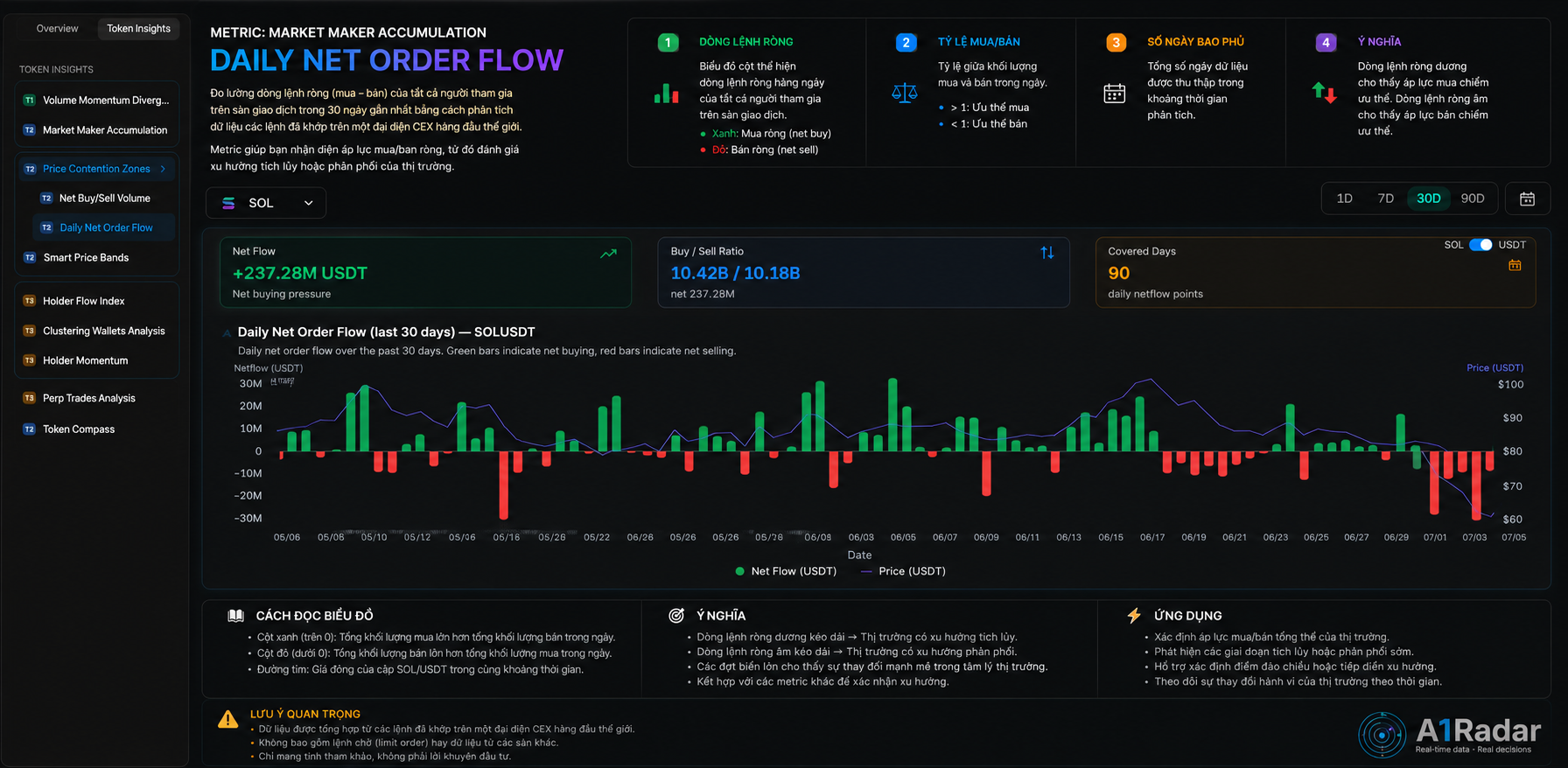
- Positive Netflow: Buying pressure or capital inflows are dominant.
- Negative Netflow: Selling pressure or capital outflows are dominant.
Netflow should always be interpreted alongside liquidity depth and price volatility, rather than in isolation.
Accumulation
Accumulation represents the state where tokens are steadily bought and held. A token shows accumulation when specific cohorts or linked wallet clusters purchase shares consistently, sell rarely, and deploy capital over multiple consecutive days.
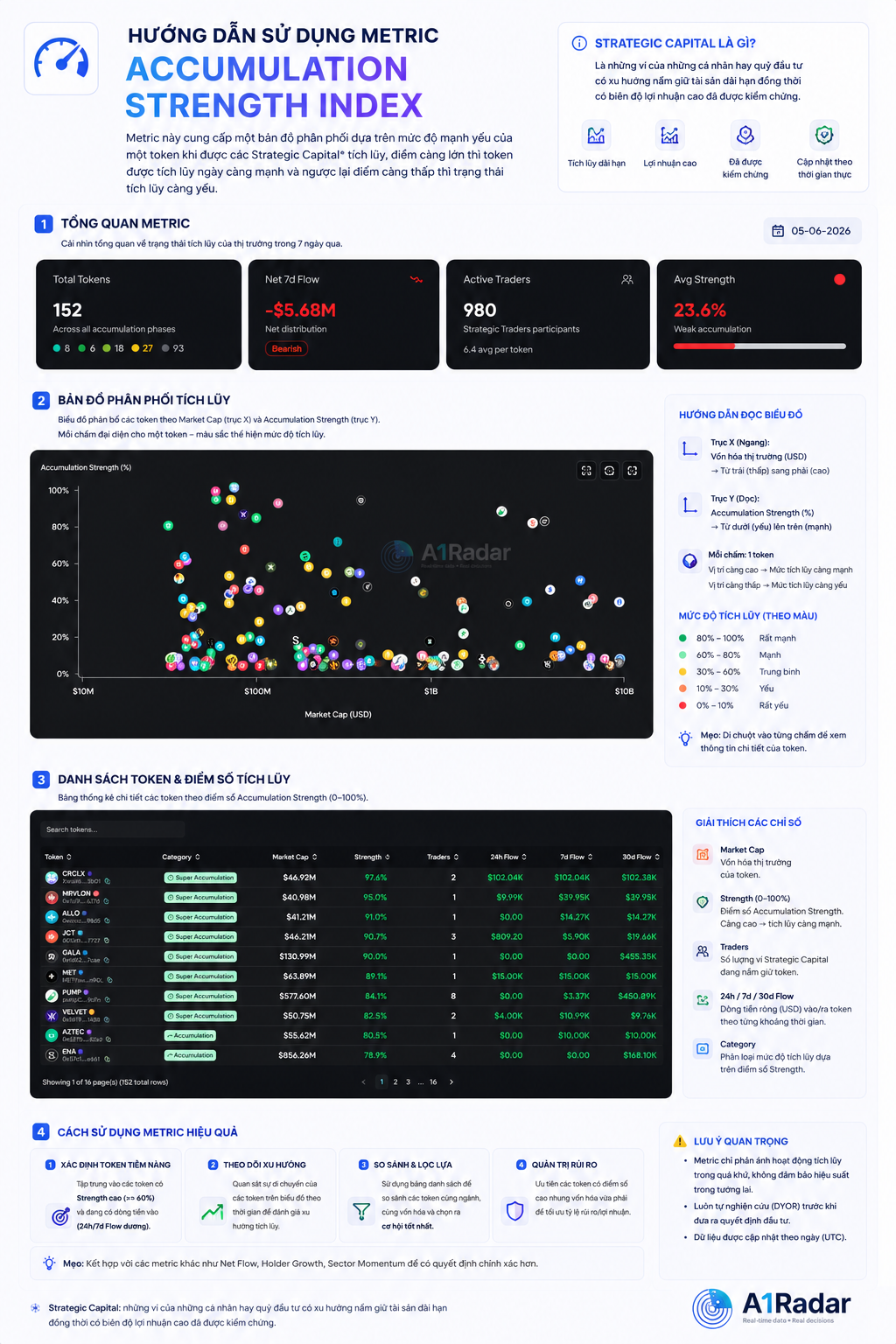
Healthy accumulation is characterized by:
- Steady capital inflows.
- Strong holder conviction (no heavy selling).
- Active participation from Strategic Traders or high-conviction wallet clusters.
Distribution
Distribution represents the state of active selling and profit-taking, particularly after a token has experienced a major price run.
Key warnings to watch out for:
- Netflow turning deeply negative.
- Holders reducing their positions.
- Strategic Traders selling net.
- Liquidity pools thinning out while volatility expands.
Strategic Traders
Strategic Traders is a vetted cohort of on-chain addresses showing high-performance transaction behaviors. They represent professional capital or experienced smart money in the crypto market.
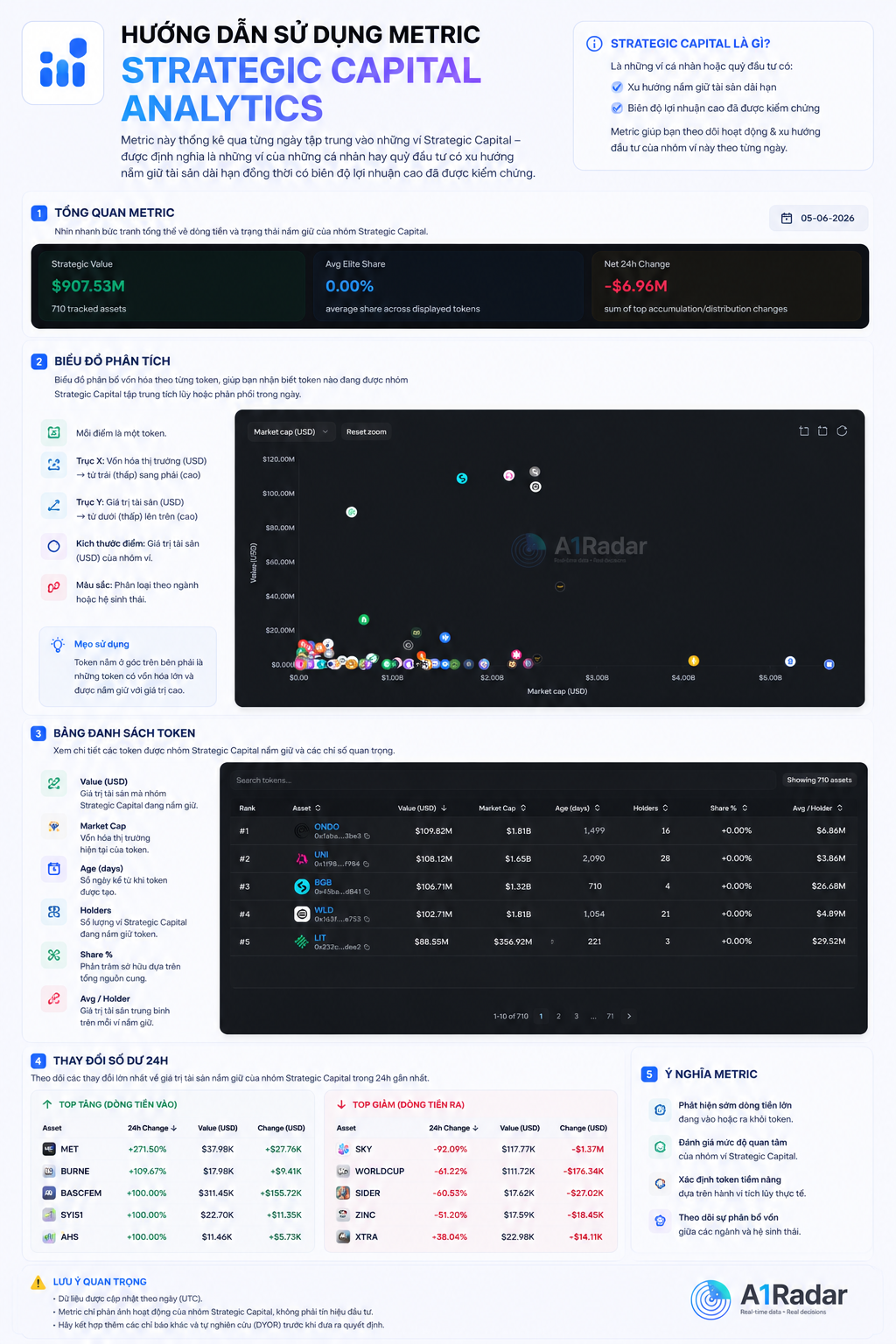
Not all Strategic Trader transactions are correct. The key is to look for consensus signals:
- Which tokens are they accumulating?
- At what cost basis (price levels) are they buying?
- Is their behavior consistent over time?
- Are other smart wallet clusters confirming the same action?
Liquidity
Liquidity represents the depth of trading pools. Deep liquidity ensures transactions can be executed with minimal slippage, validating the reliability of price movements.
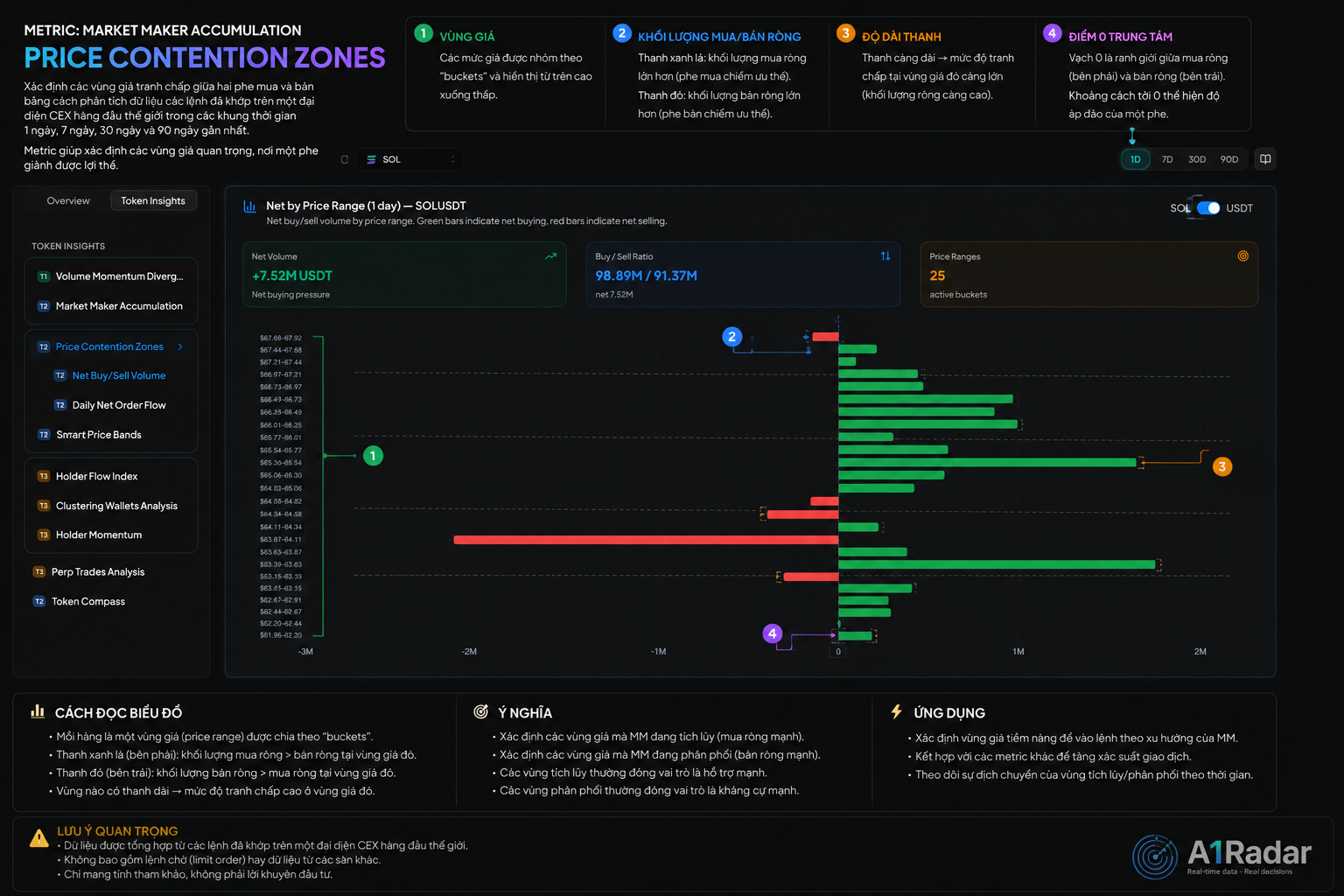
A token rising on thin liquidity is fragile, highly susceptible to manipulation, and prone to rapid reversals.
Momentum
Momentum measures the strength and speed of a price trend. In A1Radar, momentum is evaluated by combining price actions, transaction volume, capital flows, and wallet dynamics.
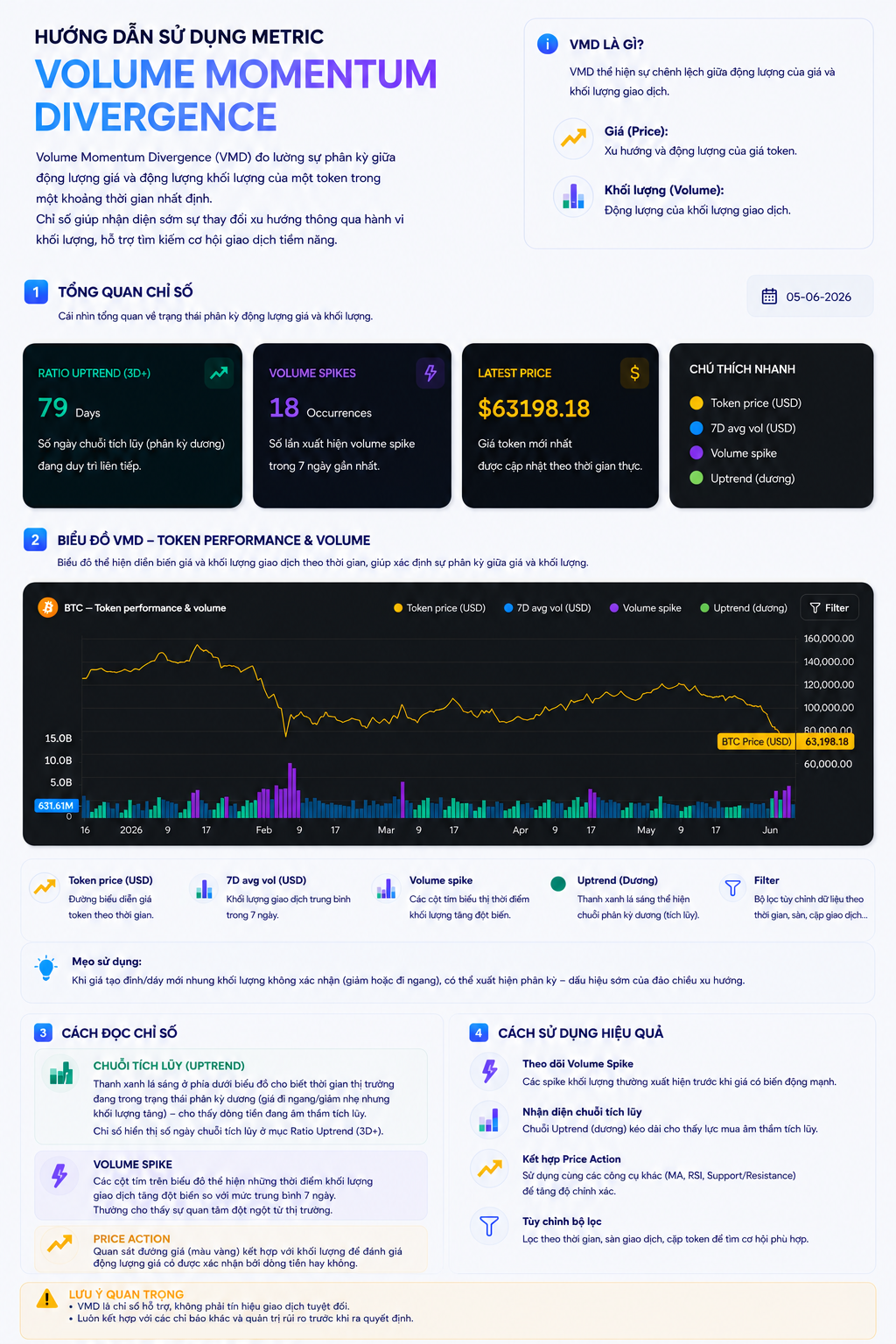
Momentum is highly reliable when:
- Trading volume increases alongside price.
- Netflow confirms the buying pressure.
- The token's overall sector is showing relative strength.
- There are no imminent major supply unlock events.
Unlock Risk
Unlock Risk refers to the supply-side inflation risk arising from locked tokens being released into circulation. Large unlocks can introduce substantial selling pressure.
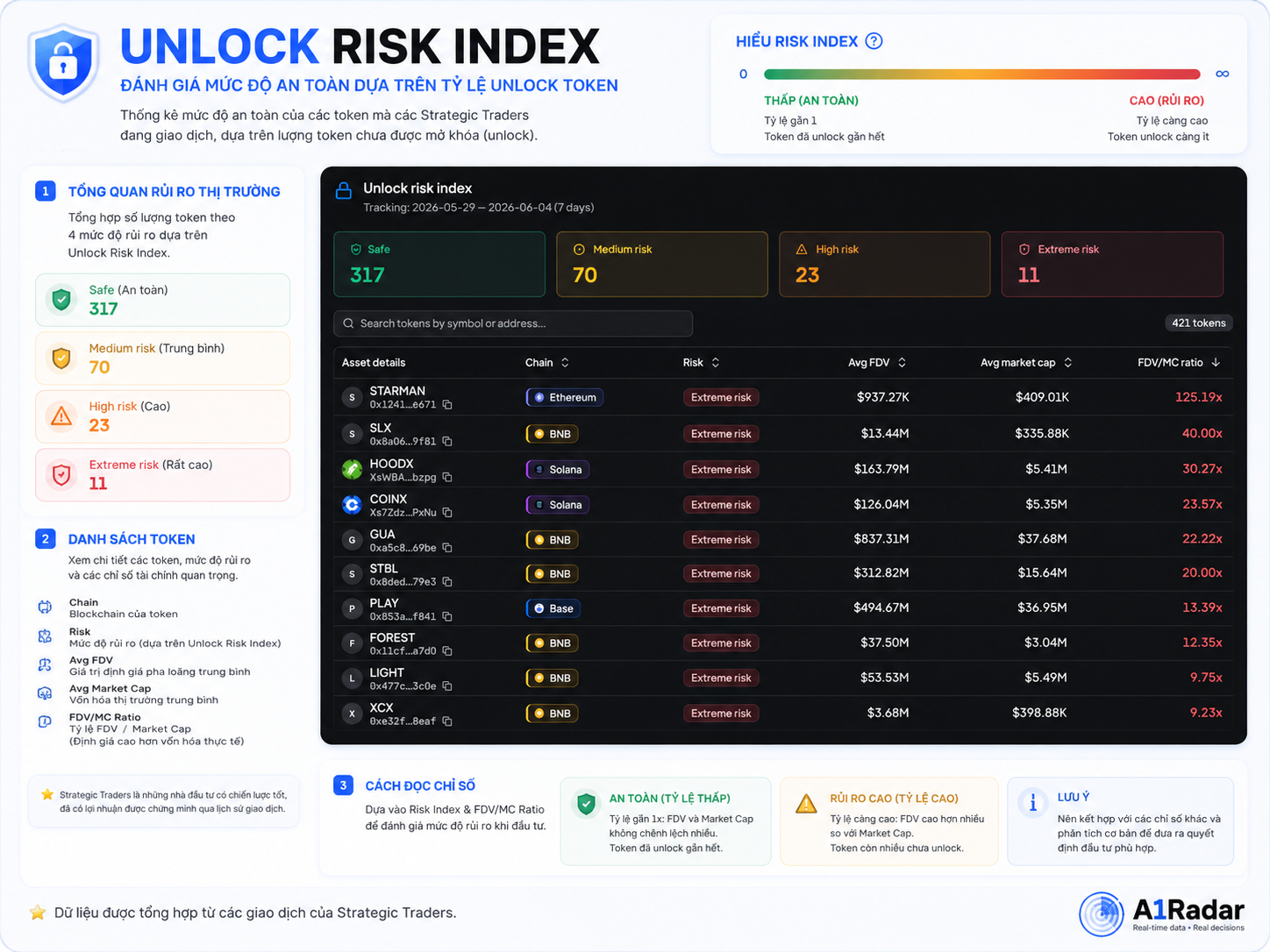
When evaluating unlock risks, consider:
- The size of the unlock relative to the token's current liquidity depth.
- The recipient of the unlocked supply (team, private investors, or community).
- The market's capacity to absorb the new supply.
Confirmation
Confirmation refers to cross-verification. A signal carries higher conviction when supported by multiple independent charts.
For example:
- Sector Performance is green (capital is entering the narrative).
- Strategic Traders are net buying.
- Gem Radar scores are improving.
- Unlock Risk is Safe or Low.
When multiple signals align in the same direction, the probability of an accurate market read is significantly higher.